
Bank Selection
We hold working contacts at the corporate desks of the major Belarusian banks. We match the client's profile to the institution most likely to onboard efficiently.

Corporate Accounts for Non-Resident Companies
Foreign companies can open business accounts in Belarus. The framework is less restrictive than in the EU. However, each application depends on the receiving bank’s compliance review.
In practice, Belarusian banks routinely onboard companies from the EU, UK, UAE, GCC, CIS, Hong Kong, Singapore, and selected offshore jurisdictions. As a result, the outcome depends less on the country of incorporation and more on how the application is positioned. We work with the corporate desks of the major Belarusian banks directly. Our role is to make sure the compliance review runs once rather than three times.
Foreign companies open Belarusian corporate accounts for four recurring reasons.
First, settlement of trade flows with Belarusian counterparties. The account handles invoice payment, export revenue, and reconciliation with NBRB currency control. Next, funding of a Belarusian subsidiary or branch. Many parent companies prefer direct capital injection over loan-based financing. Then, receipt of dividends, royalties, or interest from Belarusian sources. These flows often run through special-regime accounts under NBRB rules. Finally, holding-structure operations. The foreign company sits above one or more Belarusian assets and needs an account to support intercompany flows.
In each case, the account is the operational layer. The underlying business decides the structure.
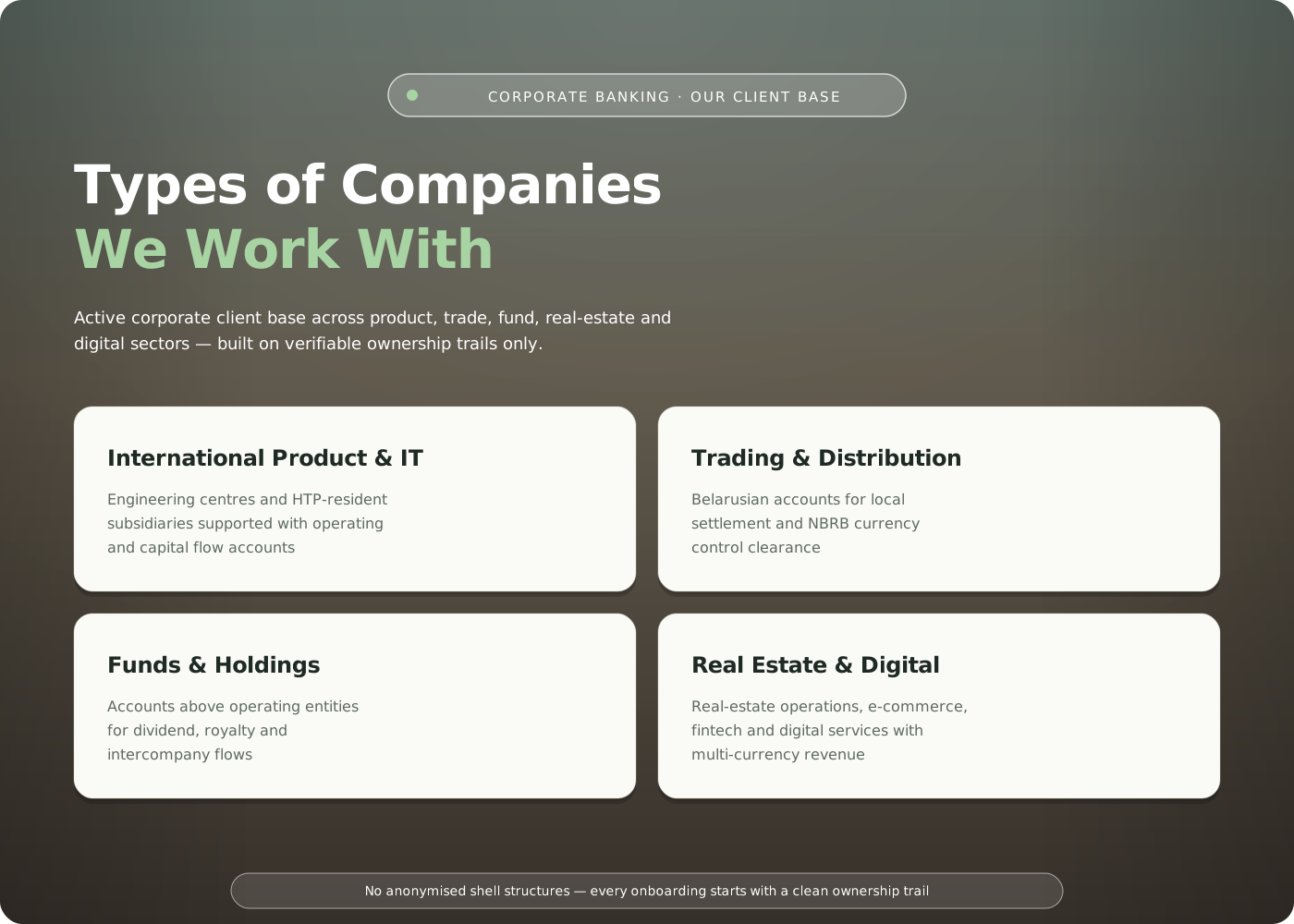
Our active client base spans several profiles. International product and IT companies open accounts to support engineering centres and HTP-resident subsidiaries. Trading and distribution firms use Belarusian accounts for local settlement and currency control clearance. Fund and holding structures hold accounts above operating entities for dividend, royalty, and intercompany flows. Real estate owners — both corporate and family-office structures — run accounts for property-related operations. Finally, e-commerce, fintech, and digital service providers handle multi-currency revenue and supplier payments through Belarusian accounts.
We do not work with anonymised shell structures or unverifiable beneficial owners. As a rule, every successful onboarding starts with a clean ownership trail.
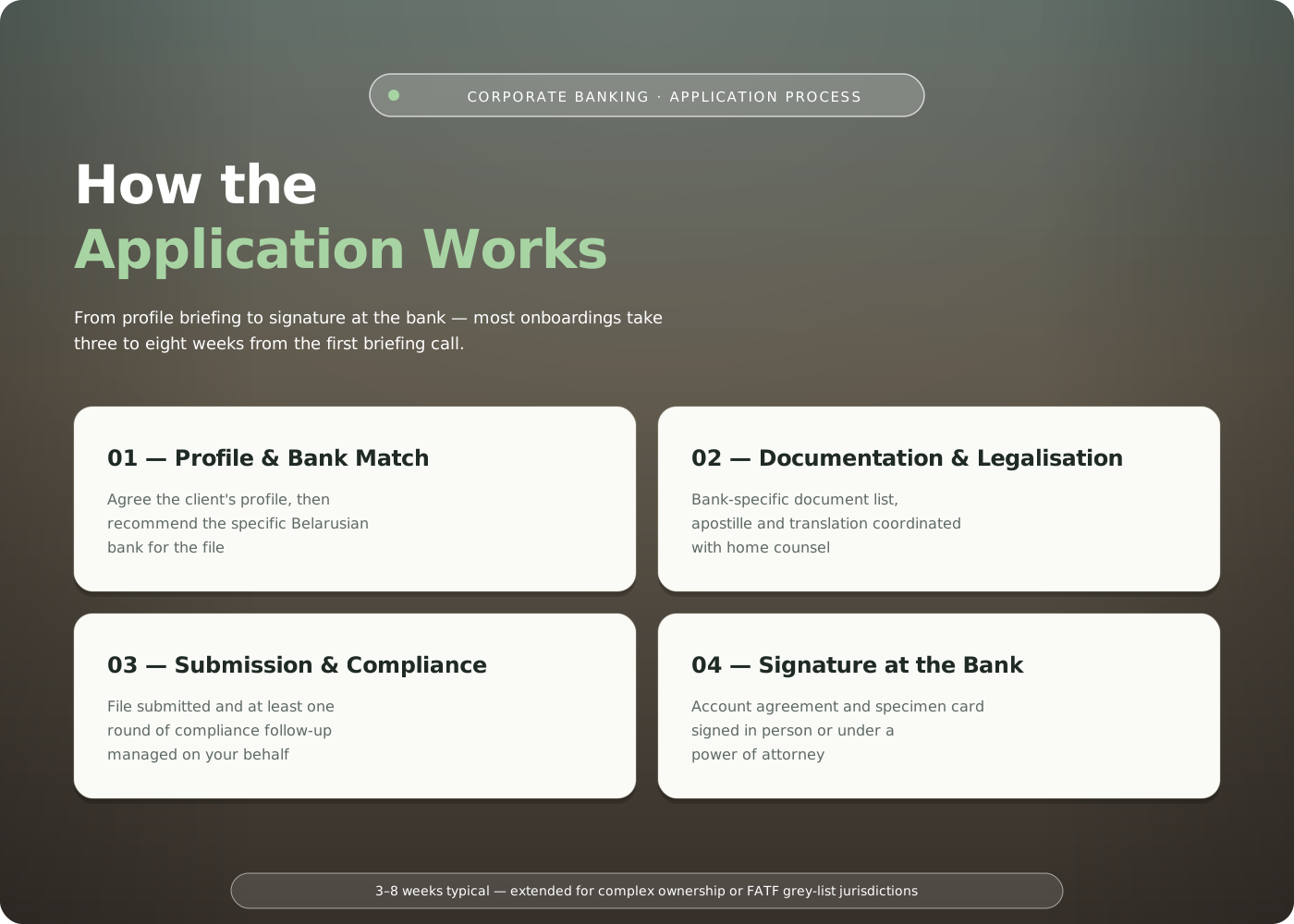
First, we agree the client’s profile and recommend the bank. Next, we list the documents required by that specific bank. Then we coordinate apostille and translation with the client’s home counsel. After submission, we manage compliance follow-ups, which arrive at least once in most cases. Finally, we attend the bank for signature of the account agreement and specimen card — either with the client present or under a power of attorney.
Most onboardings take three to eight weeks from briefing. Complex ownership structures or jurisdictions on the FATF grey list extend that range.
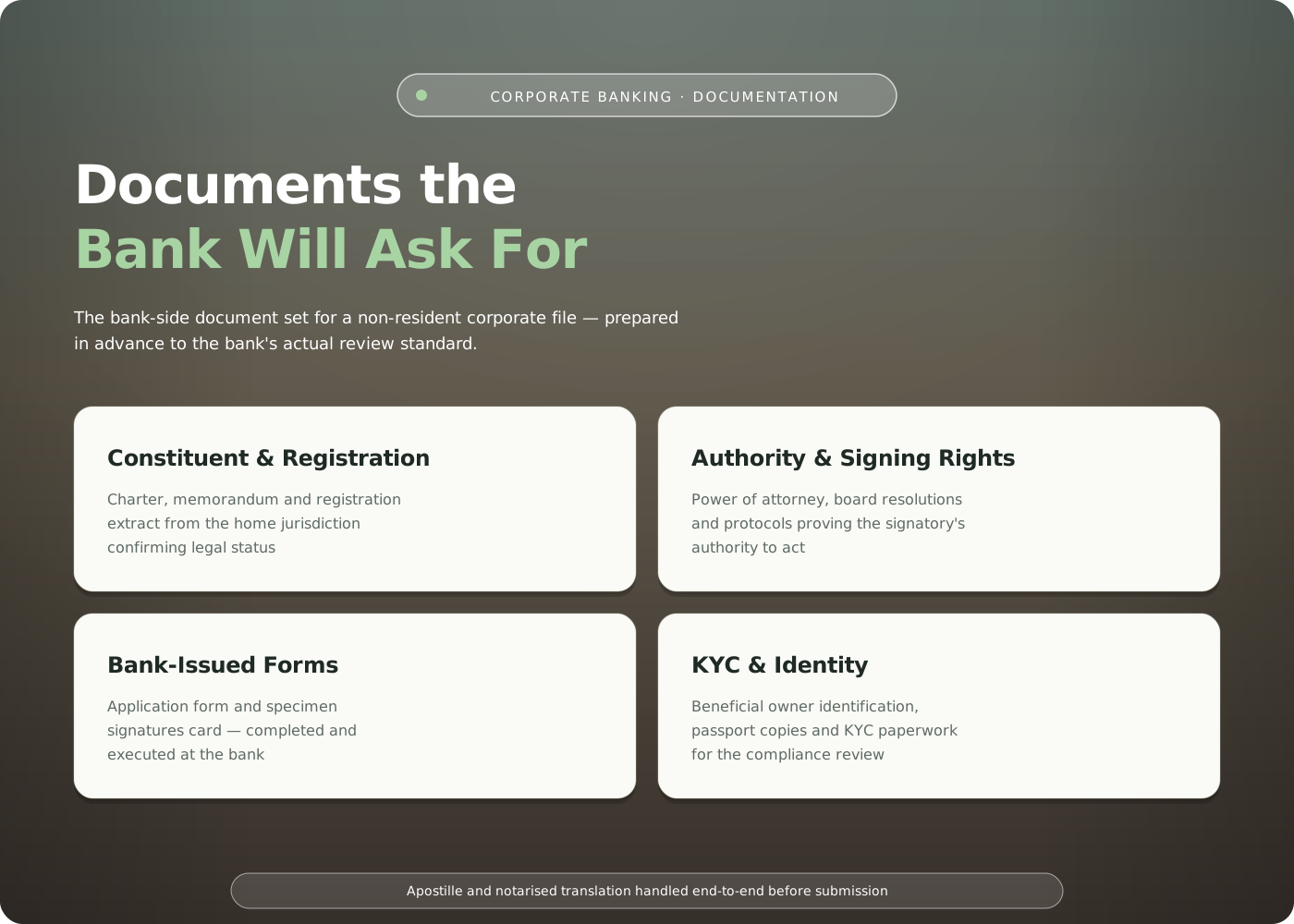
Belarusian banks request a standard core set from foreign applicants. Therefore, we prepare the full file before submission.
In addition, all foreign-language documents require notarised translation into Russian or Belarusian. Most jurisdictions also need apostille. Countries outside the 1961 Hague Convention require consular legalisation instead.
Yes. Belarusian banks regularly onboard companies from the EU, UK, UAE, GCC, CIS, Hong Kong, Singapore, and selected offshore jurisdictions. The outcome depends on the receiving bank’s compliance review, the ownership structure, and the quality of the application file.
Yes. Belarusian banks support SWIFT transfers in major currencies. However, cross-border payments are subject to NBRB currency control rules. These include contract registration above defined thresholds and transactional documentation requirements.
Yes. There is no statutory limit on the number of banks or accounts a foreign company can maintain. In practice, many clients split flows across two banks for currency, counterparty, or business continuity reasons.
Funding routes include international wire transfers from existing foreign accounts, internal transfers between Belarusian banks, and contribution from Belarusian counterparties. Meanwhile, all inbound and outbound flows must comply with NBRB currency control documentation.
Belarusian online banking systems authenticate through a SIM card issued by a Belarusian mobile operator. Where the signatories are abroad, we arrange an eSIM compatible with modern smartphones. As a result, the account remains operationally accessible from any jurisdiction. We also manage the SIM lifecycle so authentication continues to work.
Belarusian banks notify the tax inspection of new corporate accounts as part of the standard procedure. In addition, where we provide accounting services, ongoing notifications and reporting obligations are administered by our team under the same contract.

The HTP Startup Center is one of the key support instruments for early-stage technology projects within the High-Tech Park (HTP). It is designed to help teams move from an idea to a sustainable business model, minimizing legal, organizational, and financial barriers at the outset. For entrepreneurs and IT teams, the Startup Center serves as a […]

Angel investments are a key financing mechanism for early-stage startups and innovative projects. They provide not only capital but also experience, contacts, and strategic guidance. Unlike venture capital funds, angel investors usually act individually, risking their own money for promising ideas and teams that can impact the market. In Belarusian and international startup ecosystems, angel […]

Registration as a resident of the High-Tech Park (HTP) is traditionally perceived as a tool for tax optimization and access to a special legal regime for IT businesses. In practice, however, the HTP’s approach to reviewing applications is not universal. Depending on the declared type of activity, different requirements apply to applicants, and for certain […]