Management services in Belarus
Our clients
Operational Launch Without Building a Local Management Team
Belarusian incorporation requires a locally established executive function at the moment of state registration. Subsequent appointment of a foreign executive depends on work permit approval—a process that itself requires execution by the company’s existing management body. This creates a structural prerequisite for market entry.
We resolve this requirement through comprehensive management support services—providing statutory management functions, accounting, HR administration, procurement oversight, and cross-border payment coordination from day one. Clients achieve immediate operational readiness without recruiting and maintaining an in-house management team in Belarus.
Statutory Management Functions and Local Representation in Belarus
Belarusian corporate law mandates that newly registered legal entities maintain statutory management capacity within the country from the moment of incorporation. This requirement applies to interactions with registration authorities, tax agencies, banks, and other state bodies.
Our management support includes:
- Execution of incorporation and statutory documents required for state registration
- Representation before the Ministry of Justice, tax authorities, and commercial banks during account opening
- Coordination of regulatory filings and official correspondence
- Oversight of statutory deadlines and compliance milestones
- Liaison with government agencies on operational matters
All activities are performed as part of integrated management support—not as standalone nominee arrangements. Our team assumes operational responsibility for management functions while strategic decisions remain with the client’s headquarters.
Integrated Accounting and Financial Administration
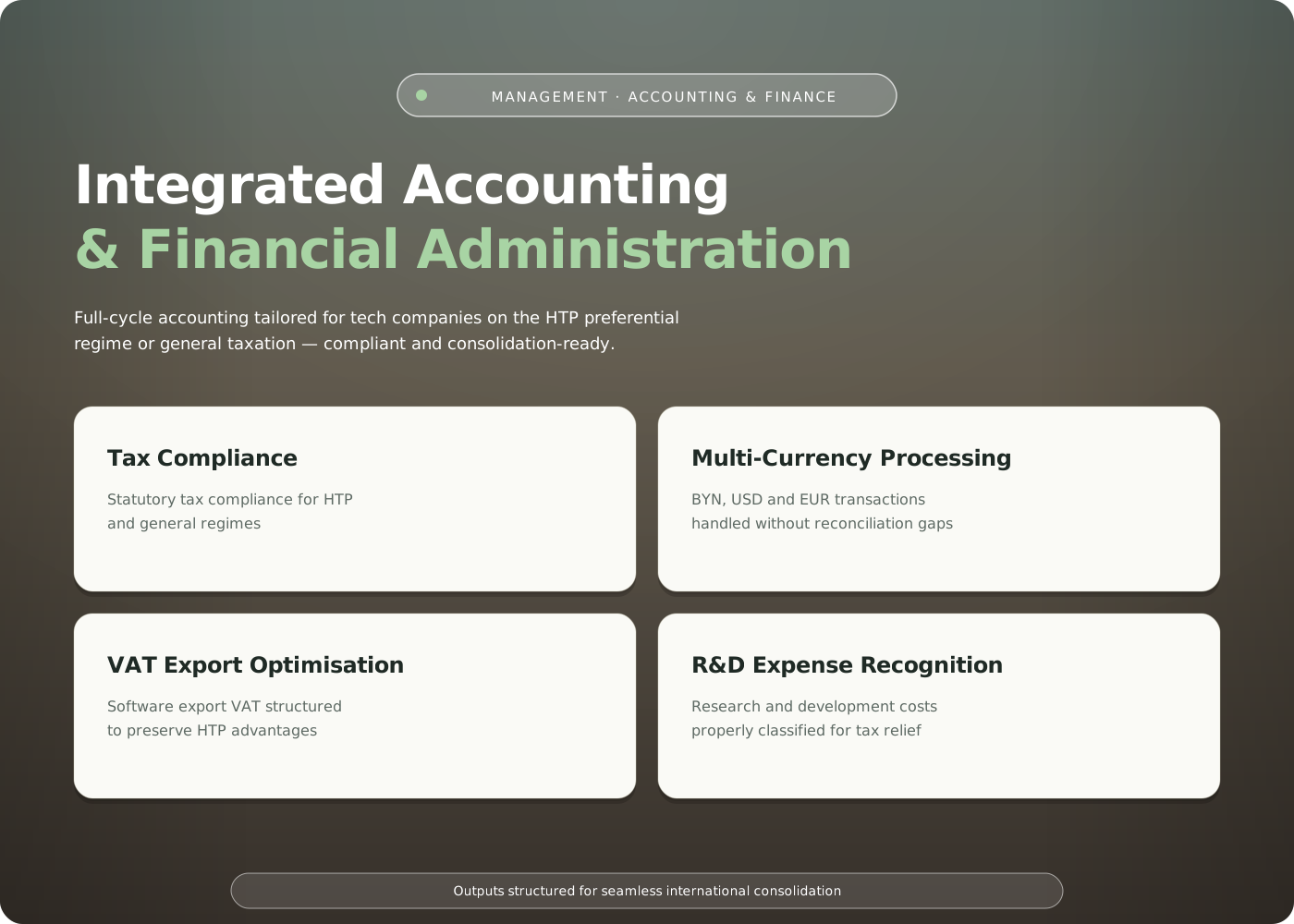
We provide full-cycle accounting tailored to technology companies operating under HTP preferential taxation or the general regime. Our services cover tax compliance, payroll processing, and statutory reporting to Belarusian authorities—including multi-currency transactions, VAT optimization for software exports, and proper recognition of R&D expenses. Financial outputs are structured for seamless integration with international consolidation requirements, applying IT-specific accounting policies rather than generic templates.
HR Administration and Workforce Management
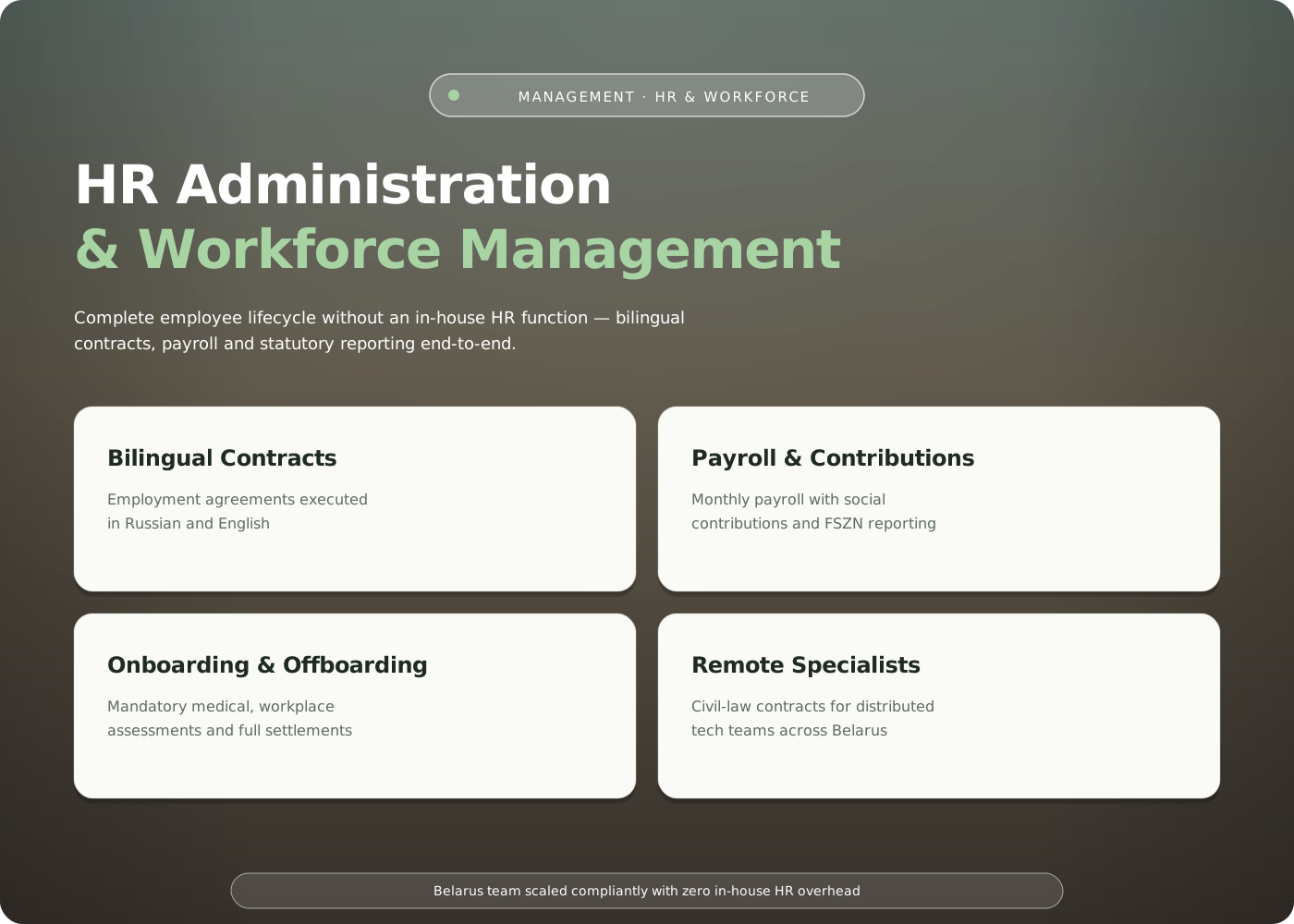
Scaling development teams in Belarus demands compliant HR infrastructure from day one. We manage the complete employee lifecycle—from staffing schedules and bilingual contract execution to payroll processing, social contributions, and statutory reporting to the Ministry of Labour. Our service includes mandatory onboarding procedures (medical examinations, workplace assessments), personnel record maintenance, and offboarding settlements. For distributed teams, we administer civil law contracts with remote specialists while ensuring full compliance with Belarusian labour regulations—eliminating the need for an in-house HR function.
Procurement and Vendor Management
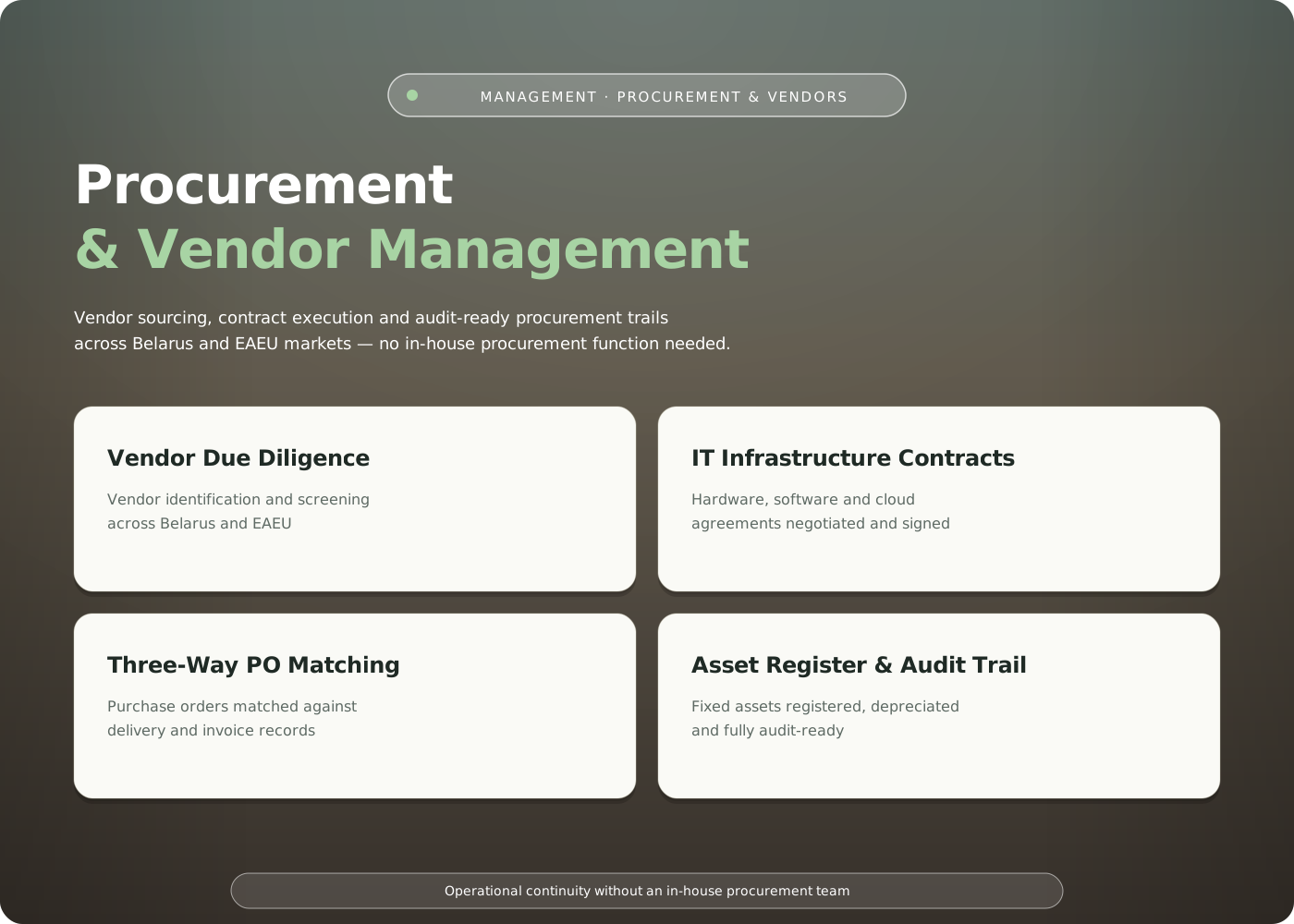
Technology companies need reliable procurement channels for hardware, software licenses, cloud services, and office operations. As part of our integrated management support, we handle vendor identification and due diligence across Belarus and EAEU markets, support contract negotiations for IT infrastructure, process purchase orders with three-way matching, and ensure fixed assets are properly registered and depreciated for accounting purposes. All procurement activities maintain budget controls, approval workflows, and audit trails compliant with Belarusian accounting standards—ensuring operational continuity without an in-house procurement function.

Cross-Border Payment Coordination and FX Management
Inbound capital transfers to Belarus require strict adherence to currency control regulations. We ensure compliant fund flows by preparing supporting documentation (contracts, invoices, acceptance certificates), coordinating with Belarusian banks on regulatory requirements, and managing multi-currency accounts with FX optimization. Our service includes reconciliation of intercompany transactions, transfer pricing documentation, and mandatory reporting to the National Bank—aligning all transfers with both Belarusian legislation and your internal treasury policies.
Top Services
HTP Residency Applications in Belarus
Accounting for Belarus IT Companies
Tax Compliance in Belarus
HR and Payroll in Belarus
Cross-Border Payments to Belarus
Procurement in Belarus and EAEU
Operational Support for Belarus Offices
Interim CFO for Belarus Operations
Why Choose Management Services?
Flexible Contractual Framework
Tax-Efficient Engagement Model
Comprehensive Expertise and Local Networks
Rapid Setup and Institutional Trust
Guaranteed Business Continuity
Executive Body Provision at Incorporation
Scale Your Team in Belarus
Pre-screened developers, QA engineers, and DevOps specialists—ready to code in a few weeks.
Why Clients Rely on Our Expertise?
Team Expertise
Precision Accounting
Compliance Shield
Global Expertise
Regulatory Integrity
Infrastructure Problem Solving
FAQ
A management company is a business that handles the day-to-day operations of another company or entity. This can include tasks like accounting, human resources, legal compliance, and administrative functions. Essentially, it allows business owners to focus on their core competencies while outsourcing non-core activities.
Staff training and development is an ongoing process aimed at improving employees’ knowledge, skills, and abilities. It involves a combination of formal training, on-the-job learning, and opportunities for personal growth. This investment in employees not only enhances job performance but also boosts morale, retention, and overall organizational success.
By providing targeted training programs and development opportunities, companies can create a skilled and adaptable workforce capable of meeting current and future challenges.
Operational efficiency is a measure of how effectively a company uses its resources to achieve its goals. It’s about maximizing output while minimizing input, such as time, money, and materials. By streamlining processes, reducing waste, and optimizing workflows, businesses can improve their operational efficiency.
Key benefits of operational efficiency include increased profitability, improved customer satisfaction, faster time-to-market, and enhanced competitiveness.
Management companies address a myriad of challenges businesses face. Here are some common issues they resolve:
- Time management: Freeing up business owners to focus on core competencies.
- Expertise gaps: Providing specialized knowledge in areas like accounting, HR, or legal.
- Operational efficiency: Streamlining processes and maximizing resource utilization.
- Risk mitigation: Identifying and addressing potential threats to the business.
- Compliance: Ensuring adherence to regulations and industry standards.
- Talent acquisition and management: Finding and retaining top talent.
- Financial management: Handling accounting, payroll, and budgeting.
- Administrative tasks: Managing day-to-day operations and paperwork.
By taking on these responsibilities, management companies allow businesses to operate more smoothly and effectively.
The cost of a management company service varies significantly based on the size of your business, the scope of services required, and the complexity of your operations.
Typically, you can expect to pay a monthly fee that covers a range of services, such as accounting, HR, legal, and operational management. Additional fees may apply for specific tasks or projects.
It’s important to note that while there may be an initial investment, the long-term benefits of outsourcing these functions often outweigh the costs in terms of increased efficiency, reduced risks, and improved focus on core business activities.
The decision between hiring a dedicated head of company and outsourcing management to a company hinges on several factors. A salaried executive offers undivided focus on your business, deep-diving into your company’s intricacies. However, this comes with significant costs, reliance on a single individual, and potential limitations in expertise.
On the other hand, a management company provides a team with diverse skills, capable of handling day-to-day operations, allowing you to concentrate on strategic growth. While there’s a potential for less direct control, you benefit from cost-efficiency, a wider skill set, and reduced administrative burdens. Ultimately, the best choice depends on your business’s specific needs, budget, and risk tolerance.